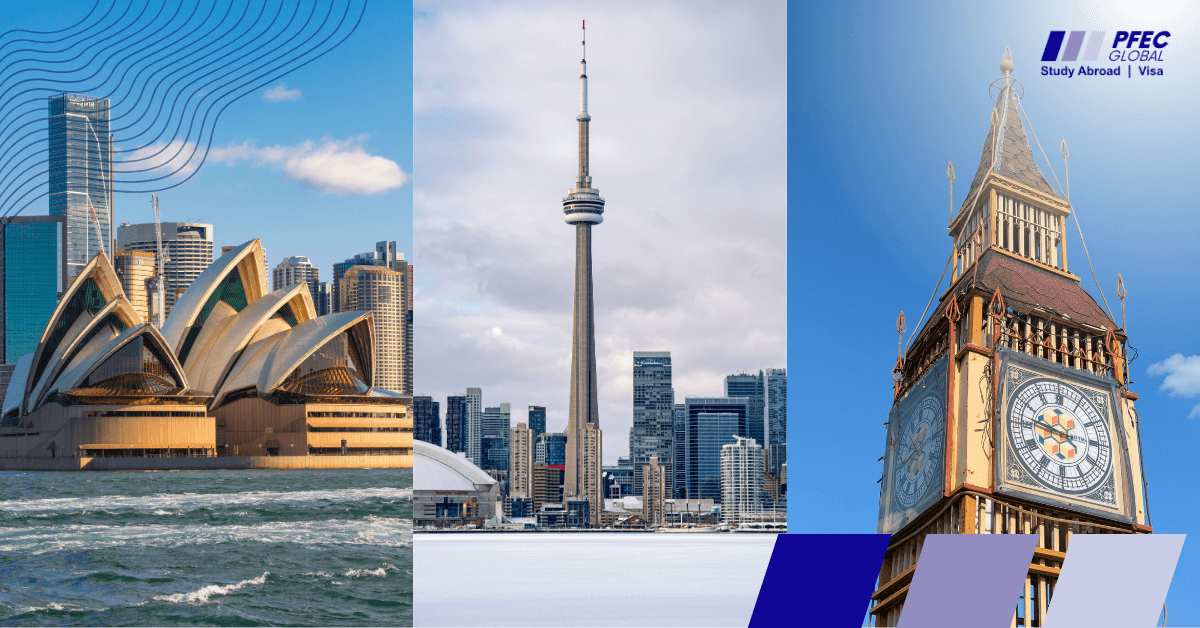
Studying abroad remains a dream for thousands of Sri Lankan students who want access to world-class education, global career opportunities, and international exposure. For many years, the United Kingdom, Canada, and Australia have been among the most popular study destinations for international students because of their high academic standards, multicultural environments, and strong post-study work opportunities.
However, in recent years these countries have introduced stricter international student visa regulations to better manage immigration numbers and ensure that student visas are used primarily for education purposes. These policy changes have made the application process more competitive and require students to prepare stronger applications.
For Sri Lankan students planning to study abroad, understanding the latest visa requirements and differences between these destinations is extremely important. With proper guidance and preparation, students can still successfully secure admission and student visas in these countries.
This guide compares the latest student visa rules in the UK, Canada, and Australia, helping you understand the key changes and choose the destination that best fits your study goals.
Why Are Countries Tightening Student Visa Policies?
Governments in the UK, Canada, and Australia have recently adjusted their immigration policies due to a rapid increase in international student applications and concerns about immigration misuse.
In many cases, some students were using education pathways primarily as a route to migration rather than academic study. As a result, governments have introduced stricter visa rules to:
- Ensure students genuinely intend to study
- Manage increasing immigration numbers
- Protect international students from fraudulent colleges
- Maintain the quality and reputation of higher education institutions
Although these changes have made the visa process more challenging, genuine students with proper documentation and strong academic plans still have excellent opportunities to study in these countries.
International Student Visa Comparison: UK vs Canada vs Australia
Understanding the differences between visa rules can help students plan their applications better.
Country | Key Visa Policy Updates | Financial Requirement | Work Rights |
United Kingdom | Dependents restrictions for many postgraduate programs and stricter visa screening | Proof of tuition + living costs depending on city | Up to 20 hours per week during studies |
Canada | Study permit cap introduced and Provincial Attestation Letter (PAL) required | GIC increased to around CAD 20,635 | Up to 20 hours per week |
Australia | Stronger Genuine Student requirement and stricter visa assessments | Living expenses proof around AUD 29,710 | 48 hours per fortnight |
These changes mean students must provide strong financial documentation, genuine study plans, and accurate application details.
Student Visa Changes in the United Kingdom
The UK remains one of the top education destinations due to its globally ranked universities and strong graduate employment opportunities. However, recent immigration policy updates have introduced stricter requirements.
Some key changes include:
- Dependents are restricted for most postgraduate taught programs
- Stronger visa screening to ensure genuine students
- Graduate Route visa available after completing eligible programs
- Increased compliance requirements for universities sponsoring visas
Despite these changes, the UK still offers excellent opportunities for Sri Lankan students who want access to globally recognized degrees and international job markets.

Student Visa Changes in Canada
Canada has historically been one of the most welcoming destinations for international students. However, the government recently introduced several changes to better regulate the international student system.
Important updates include:
- Introduction of Provincial Attestation Letters (PAL) for many student visa applications
- Increase in Guaranteed Investment Certificate (GIC) requirement to approximately CAD 20,635
- Tighter monitoring of colleges offering international programs
- Adjustments to post-graduation work permit eligibility
These policies aim to protect students from low-quality institutions and ensure better education outcomes.
Student Visa Changes in Australia
Australia remains a highly attractive study destination due to its high quality of education, strong job market, and vibrant international student community.
Recent visa policy changes include:
- Introduction of stricter Genuine Student (GS) requirement
- Increased financial proof requirement for living expenses
- Limits on working hours during academic sessions
- Stronger documentation checks during visa processing
Students applying to Australian universities must demonstrate a clear academic purpose and genuine intent to study.
How Students Can Improve Their Visa Approval Chances
Although visa policies have become stricter, genuine students can still secure approvals by preparing strong applications.
Some important steps include:
- Choosing recognized universities with good academic reputations
- Preparing accurate financial documentation
- Writing a strong statement of purpose explaining study goals
- Understanding visa policy changes before applying
- Working with experienced study abroad consultants
Professional guidance from international education specialists like PFEC Global can help students understand visa policies, select the right universities, and prepare strong applications that meet current requirements.
Why Expert Guidance Matters
Navigating international education policies, university applications, and visa procedures can be overwhelming for many students.
Experienced education consultants provide support with:
- Course and university selection
- Application documentation preparation
- Scholarship guidance
- Visa application assistance
- Pre-departure counseling
Organizations such as PFEC Global work closely with international universities and help students stay updated with the latest visa regulations, making the study abroad journey more structured and manageable.
Final Thoughts
Many governments and universities offer scholarships to international students. However, finding the right scholarship programs can be difficult without expert guidance.
A good consultant will help students explore:
- Merit-based scholarships
- Government-funded scholarships
- University-specific financial aid programs
These opportunities can significantly reduce the financial burden of studying abroad.
Frequently Asked Questions (FAQ)
What is the easiest country to get a student visa for?
The difficulty of obtaining a student visa depends on financial documentation, academic profile, and course selection. Countries like the UK, Canada, and Australia require strong documentation but offer clear study pathways.
What are the financial requirements for studying abroad?
Financial requirements vary by country. Students must usually prove tuition fees and living expenses such as CAD 20,635 for Canada or around AUD 29,710 for Australia.
Can Sri Lankan students work while studying abroad?
Yes. Most countries allow international students to work part-time during studies. Typically, students can work around 20 hours per week or 48 hours per fortnight depending on the country.
Which country is best for Sri Lankan students to study abroad?
The best destination depends on the student’s academic goals, budget, and career plans. Popular options include Canada, Australia, the UK, and the United States.